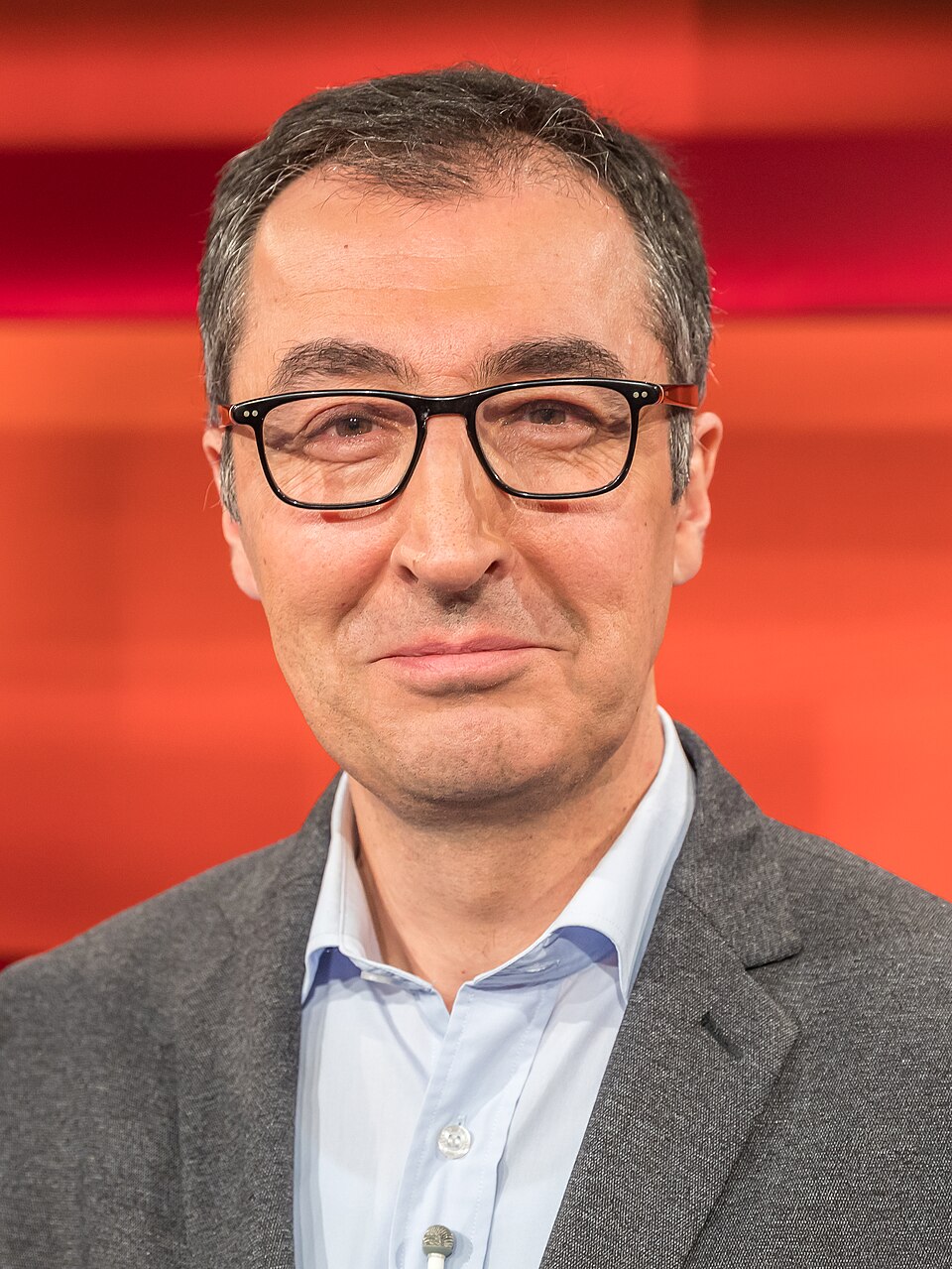
Cem Özdemir: Decoding the 'Anatolian Swabian' Identity
Cem Özdemir is a name synonymous with Germany's evolving multicultural landscape and progressive politics. As a prominent figure in the Green Party and currently the Federal Minister of Food and Agriculture, his journey is a testament to perseverance, cultural synthesis, and a profound sense of belonging. At the heart of his unique public persona lies the self-coined term: the "Anatolian Swabian." This fascinating label encapsulates a life lived at the intersection of Turkish heritage and deep German roots, offering a powerful narrative of modern identity. Understanding Cem Özdemir's Lebenslauf – his life's curriculum vitae – reveals a path that not only shaped his political career but also influenced the broader discourse on integration and representation in Germany.
The Formative Years: A Product of Two Worlds
Born on December 21, 1965, in Bad Urach, a town nestled at the foot of the Swabian Alb, Cem Özdemir's origins are deeply rooted in Germany, yet profoundly influenced by his parents' heritage. His mother and father arrived in Germany from Turkey in the early 1960s, part of the initial wave of "guest workers" who came to rebuild the post-war nation. As Özdemir himself light-heartedly quips in his biography, he is "a product of the German-Turkish recruitment agreement." His father, Abdullah, hailed from the small Turkish town of Pazar, and his mother, Nihal, from Istanbul. They met in Germany, where his father worked in a factory and his mother as an alteration tailor. Cem grew up as an only child in this Swabian setting, a microcosm of the cultural fusion that would define his life.
Early life, however, was not without its challenges. Young Cem experienced difficulties in school, a common hurdle for many children of first-generation immigrants navigating a new language and educational system. A pivotal moment in his early Cem Özdemir's inspiring path occurred at his mother's tailoring shop. A kind teacher, Irmgard Naumann, came in for a repair. Seizing the opportunity, Cem's mother pleaded for help with her son's studies. For two crucial years, from 1975 to 1977, Ms. Naumann tutored Cem, helping him transition from primary school to Hauptschule, and eventually to Gymnasium – the direct path to university. This intervention highlights the transformative power of education and the invaluable role of mentorship, demonstrating how a helping hand can redirect a life's trajectory. After completing his schooling, Özdemir trained as an educator and pursued higher education, earning a degree in Social Pedagogy from the Evangelical University of Applied Sciences in Reutlingen in 1994. During his studies, he worked as an educator in a youth center and gained practical experience freelancing for the Reutlinger General-Anzeiger newspaper and local radio, building a diverse skill set that would prove invaluable for his future career.
Embracing Identity: The "Anatolian Swabian" Label
The label "Anatolian Swabian" is more than just a catchy phrase; it's a profound statement of identity that Cem Özdemir deliberately chose and embraced. It elegantly captures the essence of his existence: born and raised in Swabia, speaking the local dialect, yet undeniably connected to his Anatolian Turkish roots. This self-identification quickly became his public brand, reflecting a nuanced understanding of belonging that transcends traditional monolithic definitions.
Özdemir's journey to solidify his German identity was a conscious choice. Although born in Germany, under the laws at the time, he initially held Turkish citizenship. At the age of 16, he made the significant decision to apply for German citizenship. His motivations were clear and pragmatic: he wished to avoid compulsory military service in Turkey and, crucially, he believed it was his right to vote and participate fully in the democratic process of the country where he was born and lived. As he states on his website, it was "completely clear to him that he wanted to be a citizen with all rights and duties in the country of his birth." While his parents initially found this "irritating," his determination underscored a desire for full integration and agency. This personal decision foreshadowed his later political career, where he would champion the rights of immigrants and advocate for a more inclusive vision of German society. The "Anatolian Swabian" identity thus became a powerful symbol of successful integration, demonstrating that one's heritage can enrich, rather than detract from, their national identity.
A Political Pioneer: From Parliament to Cabinet
Cem Özdemir's political journey began almost immediately after completing his studies in 1994, marking the start of a remarkable career in German politics. He quickly rose to prominence, becoming the first Member of the Bundestag (MdB) with Turkish roots. This achievement alone was groundbreaking, shattering barriers and signaling a new era of representation in German parliament. His ability to connect with diverse audiences, coupled with his eloquent communication style and genuine commitment to environmental and social justice, quickly established him as a rising star within the Green Party.
His ascent continued when, in 2008, the federal delegates' conference of Alliance 90/The Greens elected him alongside Claudia Roth as co-chair, leading Germany's largest ecological party. This leadership role further solidified his position as a major political force and a leading voice for progressive policies. The pinnacle of his career so far came with his appointment as the Federal Minister of Food and Agriculture, making him the first federal minister of Turkish descent in German history. This ministerial role is not just a personal triumph but a significant milestone for Germany, illustrating the nation's increasing diversity at the highest levels of government. Özdemir’s political trajectory, as detailed in his comprehensive Cem Özdemir Lebenslauf, has been characterized by consistent advocacy for human rights, diversity, and environmental protection, proving that his unique background provides a distinct lens through which to approach national and international challenges. His father's Circassian heritage, a minority group in Turkey, adds another nuanced layer to his rich, multifaceted identity, further broadening his perspective on minority representation.
Beyond Politics: A Public Figure and Role Model
Beyond the legislative chambers and ministerial duties, Cem Özdemir has cultivated a public persona that resonates deeply with many Germans, particularly those with immigrant backgrounds. His openness about his struggles and triumphs, coupled with his characteristic humor, makes him an accessible and relatable figure. His joke about being a "product of the Anwerbeabkommen" (recruitment agreement) is more than just wit; it's a narrative that reframes a historical policy within a modern context of successful integration and contribution.
Özdemir serves as a powerful role model, demonstrating that embracing one's unique cultural heritage can be a source of strength and success. His career is a practical lesson in the importance of representation – showing younger generations, especially those with similar backgrounds, that there are no ceilings to their ambitions in Germany. He actively advocates for political engagement, emphasizing the importance of active participation in democratic processes, regardless of one's background. His story offers valuable insight into the evolving nature of national identity in a globalized world, proving that identity is not a static concept but a dynamic, lived experience that can encompass multiple facets. In his ongoing public life, Özdemir continues to champion diversity, education, and social cohesion, proving that his impact extends far beyond the confines of his political office.
Conclusion
Cem Özdemir's journey, from a "guest worker" family in rural Swabia to a federal minister in Berlin, is a compelling narrative of ambition, cultural integration, and political trailblazing. His self-identification as an "Anatolian Swabian" is not merely a linguistic flourish but a profound articulation of modern German identity – one that is increasingly diverse, inclusive, and multi-layered. His inspiring Özdemir Lebenslauf illustrates how personal challenges can be overcome with determination and how unique cultural backgrounds can become powerful assets in public life. As Germany continues to navigate its identity in the 21st century, figures like Cem Özdemir stand as beacons, demonstrating that true strength lies in embracing the richness of its varied tapestry.